Long Philtrum: What It Means and How to Measure It
A practical, non-judgmental guide to the space between the nose and upper lip, its role in facial proportions, and the limits of judging it from one photo.

What Does a Long Philtrum Mean?
The philtrum is the vertical groove and skin area between the base of the nose and the upper lip. In everyday appearance discussions, a long philtrum usually describes a nose-to-lip distance that looks extended compared with the lips, chin, midface, or lower third of the same face. The word describes a proportion, not a diagnosis and not a beauty score.
Two people can have the same millimeter measurement and look different because their lip height, mouth shape, nose projection, chin length, facial width, and head size are different. A flatter upper lip can make the space look longer, while a defined cupid's bow or fuller upper lip can visually shorten it. This is why isolated online reference numbers should be treated as context rather than a universal standard.
The useful definition
A long philtrum is a relative visual relationship between the nose, upper lip, and lower face. It is not automatically abnormal, unattractive, or medically significant.
How to Measure Philtrum Length in a Photo
Use measurement to compare photos consistently, not to force your face toward one target. A straight, neutral image is more reliable than a close selfie.
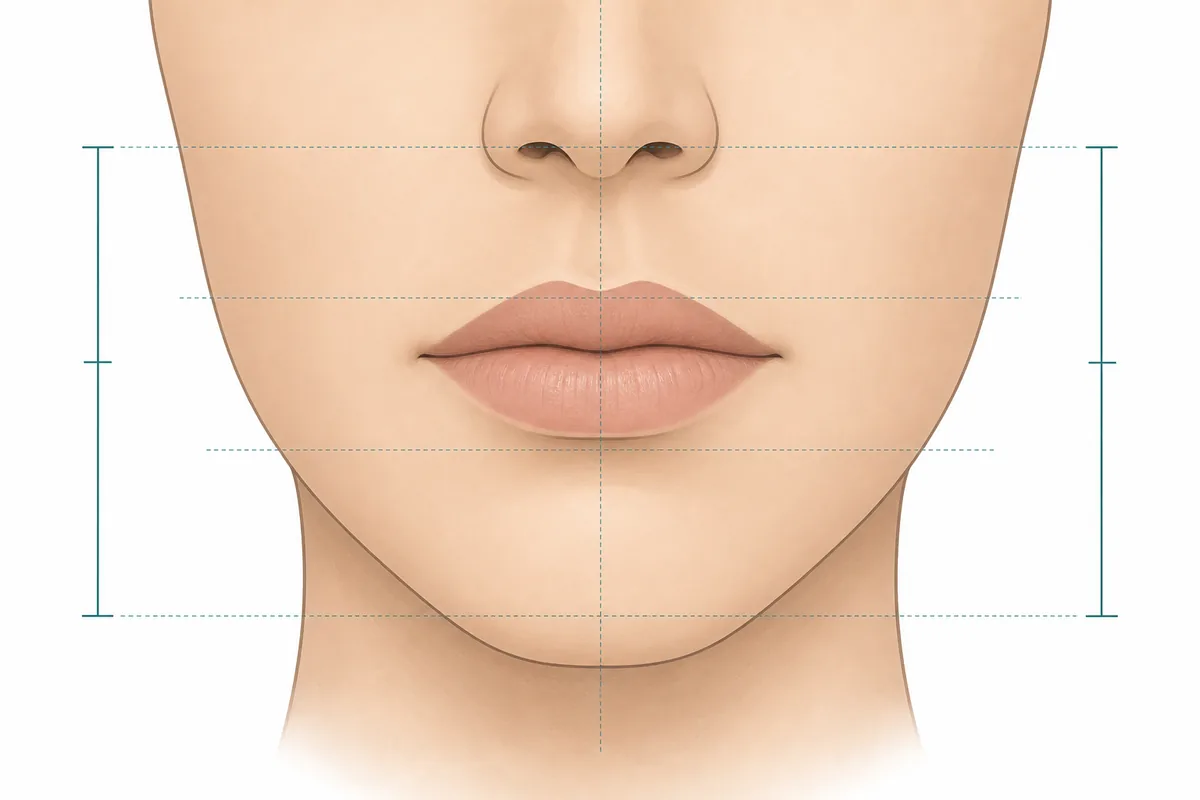
- Choose a front-facing photo taken near eye level with a relaxed mouth, even light, and minimal head tilt.
- Use a photo taken from farther away or with a portrait-length lens setting; close wide-angle selfies can enlarge the nose and distort the central face.
- Mark the subnasale, the point where the base of the nose meets the upper lip area.
- Mark the top of the upper lip at the center of the cupid's bow, then measure the vertical distance between the two points.
- For proportion context, also compare the distance from the upper lip to the bottom of the chin and review the full lower third rather than the philtrum alone.
- Repeat the measurement on a second suitable photo. If the result changes substantially, photography is probably influencing the impression.
Pixels are enough for a proportional comparison within one photo. Millimeters are only meaningful when the image has a reliable scale, so avoid converting pixels to real-world length without a reference object or calibrated capture.
Philtrum Length in Facial Proportions
The philtrum belongs to the lower part of the central face. Its visual effect depends on nearby features and on the larger vertical thirds of the face.
| Feature or condition | How it can affect the impression | What to check |
|---|---|---|
| Upper-lip height | A thinner or less everted upper lip may expose more skin between nose and lip. | Compare relaxed and smiling photos. |
| Nose projection | A projected or downturned nasal tip changes the apparent starting point and shadow. | Use front and profile views. |
| Chin and lower-face length | A short or long chin changes whether the philtrum feels dominant within the lower third. | Compare nose-to-lip and lip-to-chin distances. |
| Camera distance | A close wide-angle image distorts central features and makes ratios unstable. | Step back and avoid judging from one selfie. |
| Expression | Lip compression or jaw opening changes the upper-lip border. | Measure with a neutral, relaxed mouth. |
No row is a pass-or-fail test. The same philtrum can look balanced on one face and prominent on another because the surrounding relationships differ.
Why a Philtrum Can Look Longer in Some Photos
Photo conditions often explain why the feature looks different from one image to another. A camera held below eye level can expose more of the lower nose and lengthen the central area. A close phone lens may enlarge the nose, change lip projection, and alter the apparent nose-to-mouth distance. Strong overhead light can deepen the philtral groove, while flat light can make the area look smoother and longer.
Expression also matters. Pressing the lips together, dropping the jaw, speaking, or stretching a smile changes upper-lip height. Makeup, facial hair, lip color, and hairstyle can shift attention without changing anatomy. Before judging proportion, compare neutral front, three-quarter, and profile views taken under similar conditions.
- Head tilt and camera height change the visible underside of the nose.
- Wide-angle distortion changes central-face projection.
- Lip tension and smile shape alter the upper-lip border.
- Lighting changes the visibility of the philtral columns and groove.
- Chin posture changes how long the lower face appears.
Why Some People Have a Longer-Looking Philtrum
Most variation is simply part of normal facial diversity. The appearance can come from several overlapping factors rather than one cause.
Natural anatomy
Bone structure, soft tissue, nose shape, lip height, and inherited family traits create a wide range of normal proportions.
Growth and aging
Facial proportions change during growth, and the upper lip can appear longer with age as skin and soft tissues change.
Dental and jaw context
Tooth display, bite, jaw position, and lip support can influence how the nose-to-lip area is perceived.
Photography and posture
Lens distance, camera height, head rotation, mouth tension, and chin position can create a longer-looking philtrum without an anatomical change.
Can You Make a Long Philtrum Look Shorter?
For photos, the safest changes are technical: use a camera near eye level, step back, keep a relaxed expression, and compare several views. Styling choices such as facial hair, lip definition, or makeup can change visual emphasis, but they do not alter the underlying measurement. Online exercises and massage claims should be viewed cautiously because they do not reliably shorten adult anatomy.
Cosmetic procedures involve different goals, limitations, and risks. Anyone considering treatment should discuss anatomy, realistic outcomes, scarring, dental support, and alternatives with an appropriately qualified clinician who can examine the face in person. A ratio calculator or social-media reference cannot determine whether a procedure is suitable.
A better goal than chasing a number
Use proportion tools to understand how features relate, then prioritize a natural photo, comfort, function, and informed professional advice over an idealized measurement.
Long Philtrum FAQ
References and measurement context
- The U.S. National Human Genome Research Institute's Elements of Morphology resource defines philtrum landmarks and normal descriptive variation. Elements of Morphology: Philtrum
- StatPearls reviews upper-lip anatomy, including the philtrum, orbicularis oris, blood supply, and clinical context. NCBI Bookshelf: Upper Lip Anatomy
- The American Academy of Facial Plastic and Reconstructive Surgery provides patient-safety guidance for choosing a qualified facial plastic surgeon. AAFPRS patient information
Last updated: July 16, 2026