How Old Do I Look? AI Age Guesser Guide
A practical guide to AI age estimation from photos, including accuracy limits, photo-quality tips, privacy checks, and how to interpret apparent-age results.

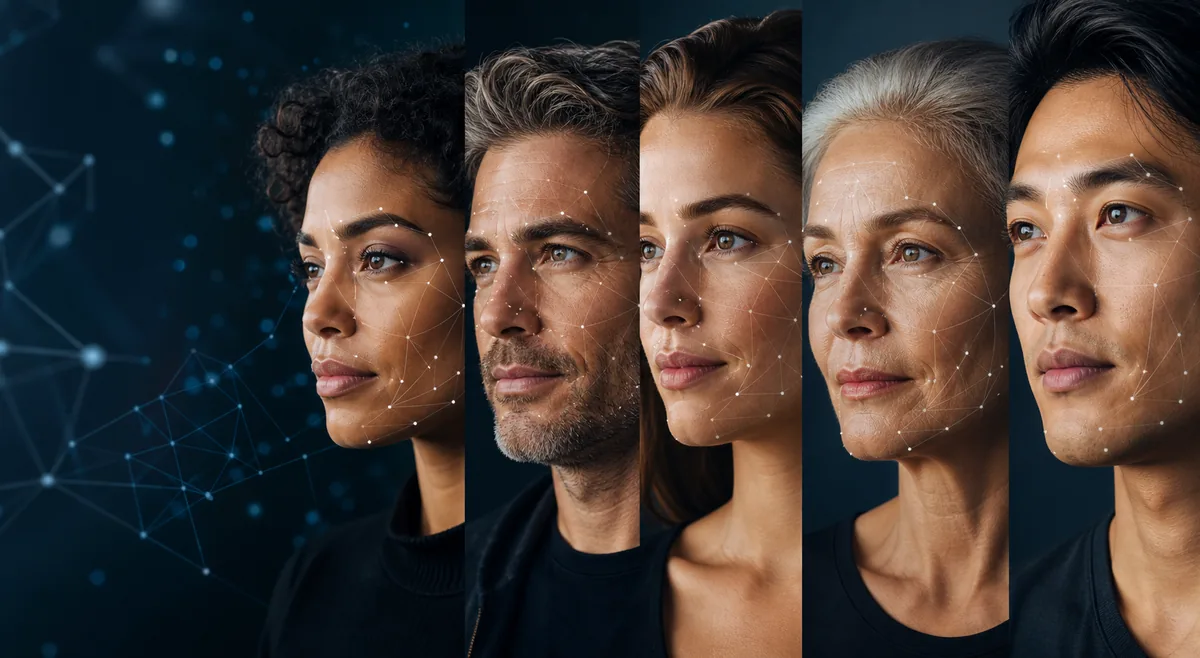
AI age estimation works from visible cues in a specific photo, so lighting, angle, expression, and image quality all matter.
Table of Contents
What Is an AI Age Guesser?
An AI age guesser is a photo-based system that estimates how old someone appears. The common search question is simple: "How old do I look?" The answer, however, depends on the image the model sees. A front-facing portrait in soft light can produce a very different apparent-age estimate from a low-light selfie, a wide-angle close-up, or a photo with heavy makeup and strong shadows.
Most age-estimation systems look for patterns that often correlate with age, such as skin texture, eye-area lines, face shape, facial volume, hairstyle context, and overall image quality. These cues are statistical, not personal truth. The model is estimating apparent age in a photo, not biological age, health, maturity, attractiveness, or value.
Best framing
Use age guesser results as photo feedback: What does this particular image make visible, and what might change if the lighting, pose, lens, or expression changed?
How AI Estimates Apparent Age from a Photo
Different products use different models, but most AI age estimation follows a similar workflow. Understanding the workflow helps you spot weak results.
- Face detection: The system first finds a face in the image and checks whether the face is visible enough to analyze.
- Landmark and region analysis: It then maps areas such as the eyes, cheeks, mouth, jawline, forehead, and face outline. Some systems also evaluate skin texture and contrast patterns.
- Feature comparison: The extracted cues are compared with learned patterns from labeled face-image datasets. The output is usually a predicted age or age range.
- Confidence and uncertainty: Higher-quality images tend to give more stable results. Poor lighting, blur, heavy filters, unusual angles, and partial faces increase uncertainty.
This is why a responsible result should read like an estimate, not a verdict. If two clear photos give different ages, the model may be reacting to image conditions as much as to the face itself.
Photo Quality Factors That Change the Result
Before comparing age guesser tools, start with the photo. A model can only evaluate what the image makes visible. The same person may appear younger or older when shadows emphasize texture, a close lens distorts proportions, or a tilted head changes facial geometry.
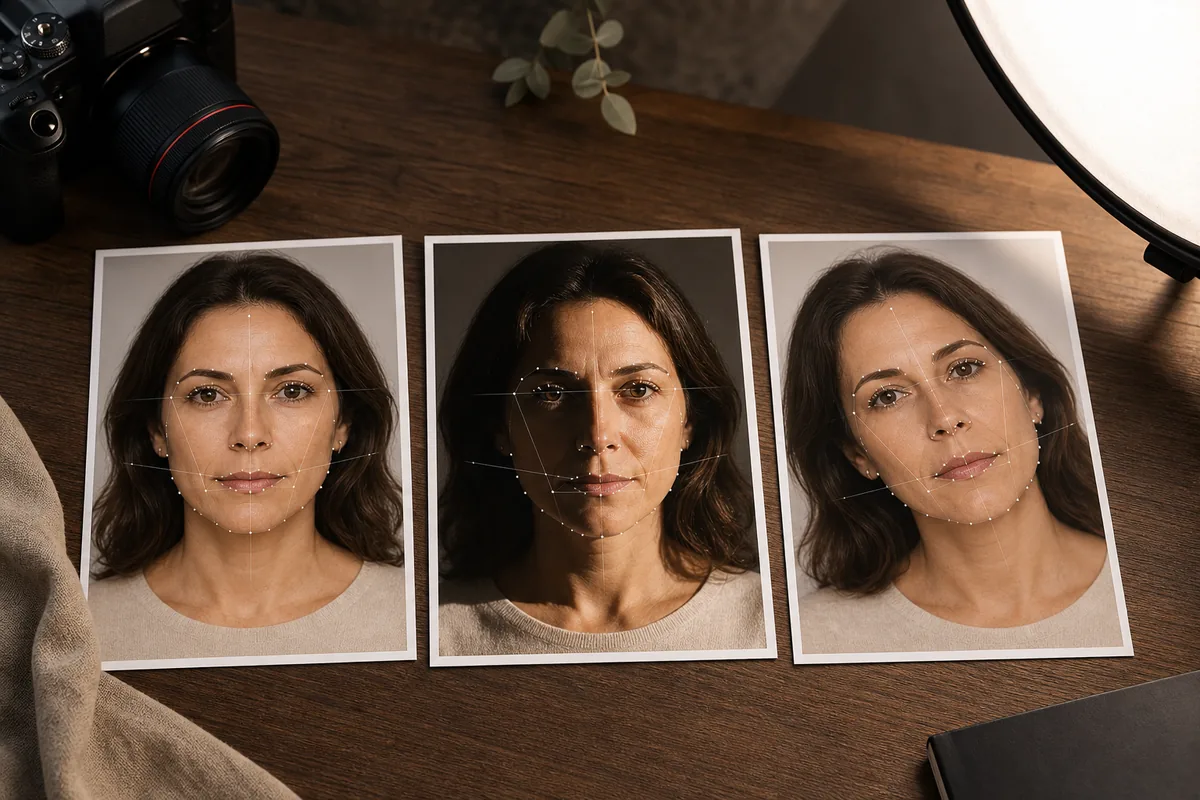
| Factor | Why it matters | Better choice |
|---|---|---|
| Lighting | Harsh side light can emphasize texture and shadows. | Use soft, even light from the front or slightly above. |
| Angle | Head tilt and close lenses can distort facial geometry. | Use a straight-on portrait from a normal distance. |
| Expression | Squinting, broad smiles, and tension can change eye and mouth cues. | Use a relaxed, natural expression. |
| Filters | Beauty filters may smooth texture or change feature shape. | Use an unfiltered photo for measurement. |
| Resolution | Blur hides landmarks and skin detail. | Use a sharp photo where the face is clearly visible. |
For the most repeatable result, use two or three photos taken in similar conditions and compare the range instead of trusting a single number.
How Accurate Is an AI Age Guesser?
Age estimation can be surprisingly close on clear adult portraits, but accuracy varies by model, dataset, age range, ethnicity, lighting, camera quality, and whether the face is partly hidden. Many tools report a single age because it feels simple, yet an age range is usually more honest.
The result is also affected by grooming and style. Hair color, facial hair, makeup, glasses, expression, and image sharpness can all shift the apparent age a model predicts. That makes age guessers better for light feedback and photo experimentation than for any serious identity, employment, medical, or legal decision.
Important limitation
Do not use an AI age guesser to verify a person's real age, assess health, judge eligibility, or make decisions about another person. Use it as an educational and entertainment estimate only.
When an Age Guesser Is Useful, and When It Is Not
The strongest use cases are low-stakes and photo-specific. If the decision has consequences, the tool is the wrong source of truth.
| Goal | Best use | Caution |
|---|---|---|
| Curiosity | Try a few clear portraits and compare the range. | Do not read one number as identity or value. |
| Photo feedback | Check whether lighting or angle makes you appear different. | The model may react more to the photo than to your face. |
| Skincare or styling experiments | Compare similar photos taken under controlled conditions. | This is not evidence that a product changed biological age. |
| Age verification | Use official identity or compliance systems. | A public age guesser is not reliable enough for decisions. |
Privacy Checks Before Uploading a Face Photo
A face photo is sensitive personal data. Before using any age detector or "guess my age" tool, check how the service handles uploads, whether images are stored, whether they are used for training, and whether deletion is available.
- Prefer services with clear privacy policies and HTTPS pages.
- Avoid uploading photos of children, other people, identity documents, or images you would not want stored.
- Remove unnecessary metadata from photos when possible.
- Use lower-stakes images if you are only testing how a model responds.
- Be cautious with apps that require account sign-in before explaining retention or deletion.
This site explains its general photo-handling and data practices in the Privacy Policy.
How to Interpret an Apparent-Age Result
A useful reading focuses on patterns, not a single number. Treat the estimate as one signal about one image.
- Compare several clear photos rather than one selfie.
- Look for consistent direction: does soft light, neutral expression, or a straighter angle change the estimate?
- Separate photo feedback from self-worth. The result describes an image, not your value or overall appearance.
- If the estimate seems strange, inspect the photo first: blur, shadow, crop, lens distortion, and filters are common causes.
- Use face proportion tools when your real question is about symmetry, facial thirds, golden ratio cues, or midface balance instead of age.
The best outcome is not chasing a younger number. It is understanding how photos communicate age cues and how to choose images that represent you clearly.
Related Face Analysis Tools
If your actual question is broader than age, use a tool that matches the measurement you want. These pages stay closer to facial proportion and photo-quality interpretation.
- Golden Ratio Face Calculator - Analyze overall facial proportion and golden ratio cues from a photo.
- Face Symmetry Test - Check left-right balance and symmetry cues.
- Facial Thirds Calculator - Measure upper, middle, and lower face balance.
- ChatGPT Face Rating Guide - Learn how to ask AI chat tools for safer, more useful face feedback.
Frequently Asked Questions
About the Author
Emily Chen
Emily Chen writes about consumer AI, facial analysis tools, and privacy-aware image workflows. Her work focuses on explaining what photo-based AI can estimate, where uncertainty enters the result, and how readers can use face analysis tools without treating a single score as a judgment.
References and Further Reading
- NIST Face Recognition Vendor Test reports - Government testing program for face recognition performance and demographic effects.
- Scientific Reports research on age estimation from face images - Research context for machine learning and facial age estimation.
- Microsoft Face service transparency note - Documentation showing that face analysis services change over time and require responsible use.
Last updated: July 2, 2026