Canthal Tilt Meaning: How to Read Positive, Neutral, and Negative Tilt
A practical guide to checking eye-corner angle from several good photos without turning one feature into a beauty verdict.

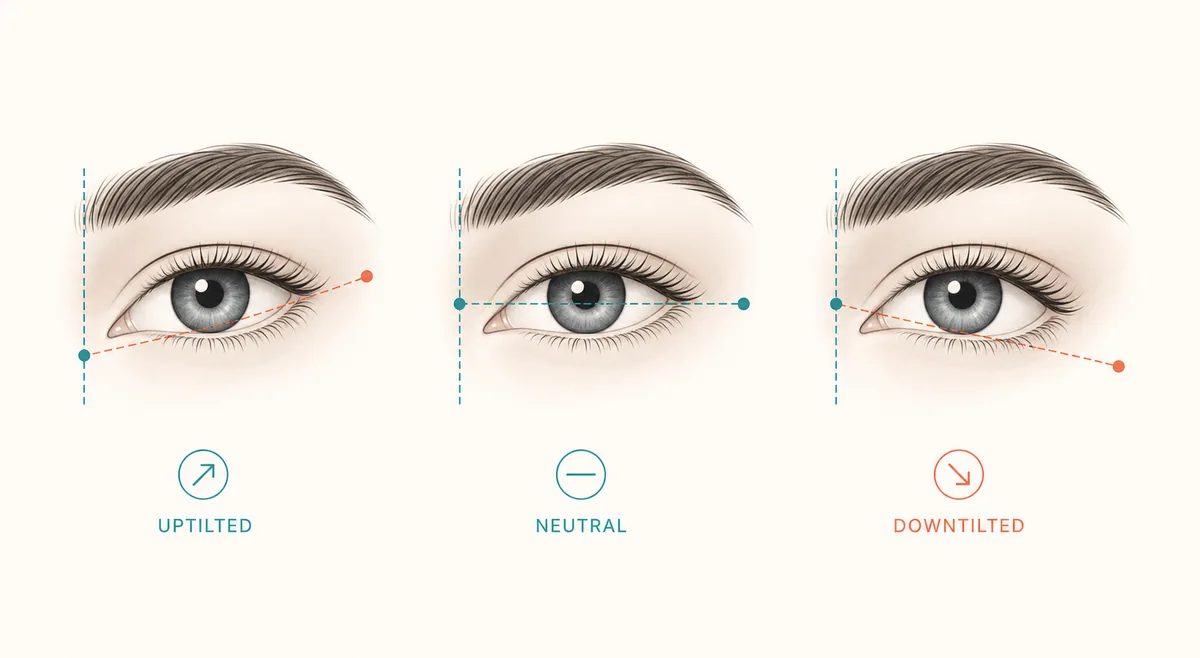
Canthal tilt compares the outer eye corner with the inner corner. Positive, neutral, and negative are descriptive patterns, not attractiveness scores.
Table of Contents
What Does Canthal Tilt Mean?
Canthal tilt describes the slant of the eye opening when you compare the inner canthus, near the nose, with the outer canthus, near the temple. If you draw a line between those two points, the direction of that line is the basic canthal tilt.
People search for canthal tilt meaning because a small eye-area angle can change how a photo feels. Positive canthal tilt may read as lifted, neutral canthal tilt may read as level, and negative canthal tilt may read as softer or lower in some images. None of these labels is automatically better or worse: eyelid shape, brows, cheek support, symmetry, lighting, and expression all affect the final impression.
Best way to use the idea
Treat canthal tilt as one small measurement in the eye area. It can explain part of a photo's look, but it should not be used as a standalone attractiveness score.
Positive, Neutral, and Negative Canthal Tilt
Positive, neutral, and negative canthal tilt are useful labels for comparing the outer eye corner with the inner corner. They describe a continuous angle, so a subtle result should not be forced into a dramatic category.
| Pattern | What it means | How to interpret it |
|---|---|---|
| Positive canthal tilt | The outer eye corner sits slightly higher than the inner corner. | Often reads as lifted or alert, but it still depends on eyelids, brows, and face shape. |
| Neutral canthal tilt | The inner and outer eye corners are close to level. | Often reads balanced and natural, especially when the eyes are symmetric. |
| Negative canthal tilt | The outer eye corner sits lower than the inner corner. | May read softer or more tired in some photos, but mild negative tilt is normal variation. |
The most useful comparison is positive vs negative canthal tilt across consistent photos. If the label changes from one selfie to the next, check the camera and head position before assuming the anatomy changed.
How to Check Canthal Tilt From a Photo
To check canthal tilt, start with a calm, straight-on photo rather than a close selfie. The goal is to compare the inner and outer canthus of the same eye while reducing head tilt, lens distortion, squinting, and strong expression.
- Choose a straight-on photo with both eyes visible, relaxed eyelids, and no heavy smile.
- Keep the camera near eye level and make sure the head is not leaning or rotated.
- Find the inner corner and outer corner of the same eye, then imagine a line between them.
- If the outer corner appears higher, the tilt is positive; if nearly level, neutral; if lower, negative.
- Repeat on the other eye and compare two or three similar photos before deciding the pattern is consistent.
If one eye appears positive and the other negative, first check whether the face, camera, or image crop is tilted. A photo can exaggerate ordinary left-right variation, so a dedicated symmetry check is more useful than a single dramatic selfie.
Photo Mistakes That Can Change a Canthal Tilt Reading
Canthal tilt is easy to misread because it uses small points around the eyes. Before interpreting the angle, rule out these photo issues.
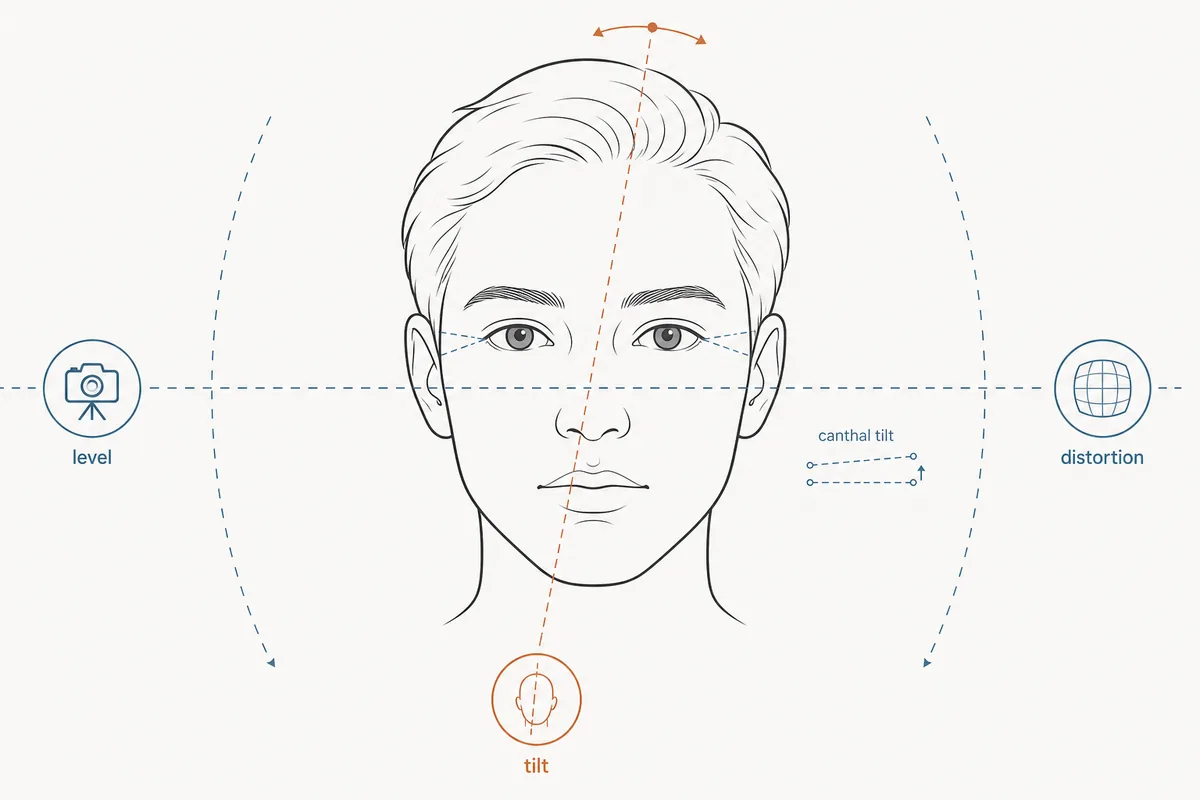
- Head tilt: A small lean can make one eye look more upturned and the other more downturned.
- Camera height: A high or low camera changes eyelid exposure and can alter how lifted the outer corner appears.
- Lens distance: Close selfies exaggerate the central face and can distort the line between eye corners.
- Expression: Squinting, smiling, raising the brows, or relaxing the lower lid can change the visible eye opening.
- Eyeliner and lashes: Makeup can visually lift or lower the outer corner, so judge natural structure separately from styling.
How Canthal Tilt Fits Into Facial Harmony
Canthal tilt matters most when it is read with the rest of the face. A lifted eye corner may support a sharp or alert look, while a flatter or lower eye angle can work with softer features. Neither reading is complete without symmetry, brow shape, cheek structure, midface balance, and facial thirds.
For photo-based analysis, compare the eye-area reading with broader face proportion tools. A face symmetry test can help separate real left-right imbalance from camera tilt, and a facial harmony calculator can place the eye cue inside a wider proportion pattern.
Can You Change a Negative Canthal Tilt?
The underlying position of the eye corners is anatomical, so major structural change is not something to treat casually. Some people use makeup, lash direction, eyebrow grooming, hairstyle, camera angle, or lighting to make the outer eye area look more lifted in photos.
Medical or surgical options such as canthoplasty or related eyelid procedures should only be discussed with qualified clinicians. Online canthal tilt advice often oversimplifies risks and suitability, especially when it frames a normal eye shape as a flaw.
Keep the interpretation conservative
If you are using canthal tilt for self-analysis, start with better photos and broader facial context before considering any permanent change.
Canthal Tilt FAQ
References and Further Reading
- Research on facial attractiveness often discusses symmetry, averageness, eye-area cues, and the limits of reducing appearance to one measurement. NCBI / PubMed Central
- For broader context on ratios, symmetry, and midface balance, read the face proportions guide. Face Proportions Guide
- For left-right balance and camera tilt checks, use the dedicated face symmetry test. Face Symmetry Test
Last updated: August 13, 2026