AI Attractiveness Test: How AI Rates Your Face
A practical guide to AI face raters, facial features, score meaning, photo quality, accuracy limits, and privacy.

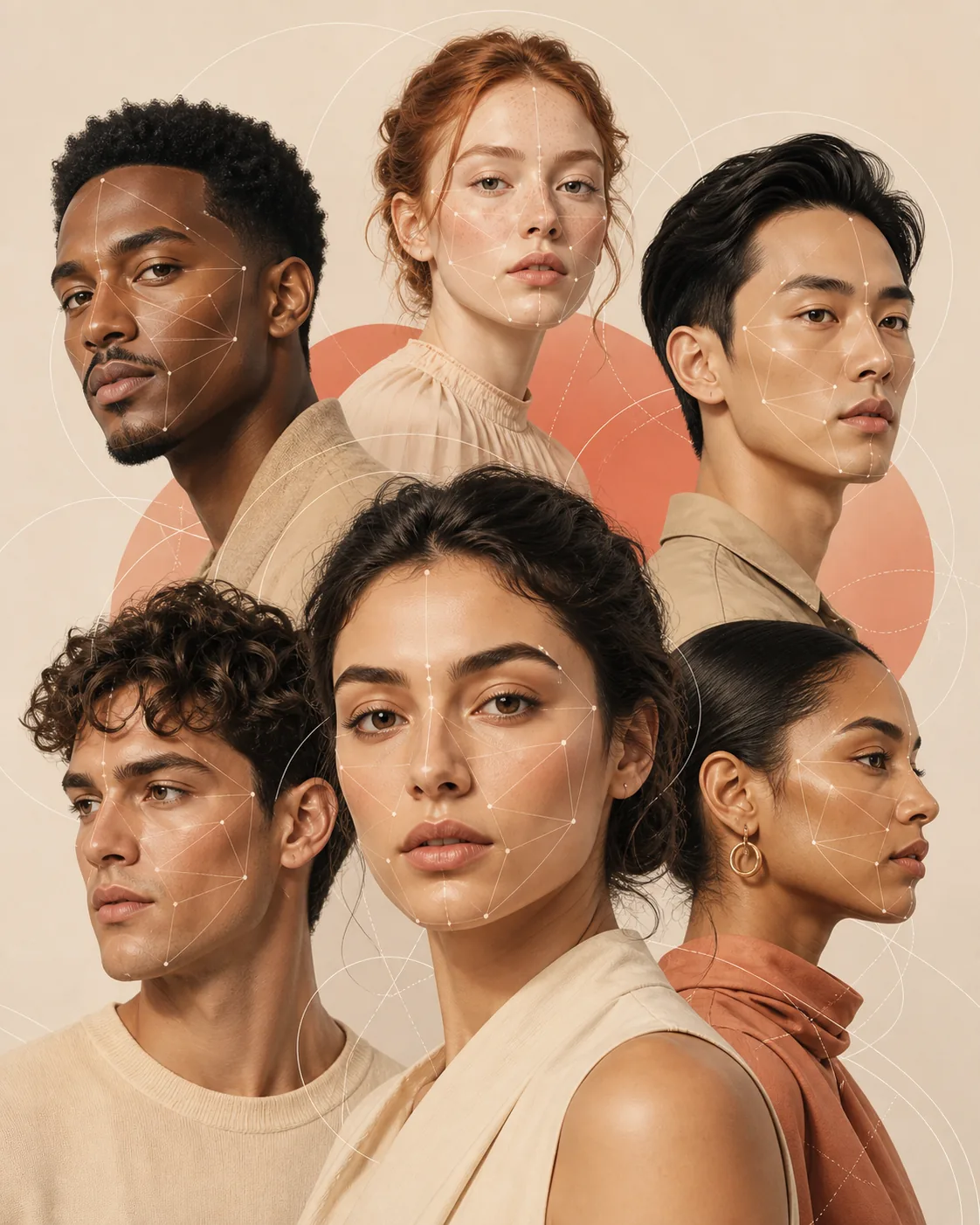
Quick answer: An AI attractiveness test analyzes one face photo and estimates how closely visible features match patterns that people have often rated as attractive. It may examine proportions, symmetry, feature relationships, skin appearance, lighting, and framing. The result is a model-dependent photo estimate, not an objective beauty measurement or a statement about your worth.
What Is an AI Attractiveness Test?
An AI attractiveness test is a computer-vision application that analyzes a face photo and returns a rating, score, description, or comparison. People also search for an AI face rater, face attractiveness analyzer, or facial attractiveness test when they want a quick way to understand how an image is being read.
Most systems first locate the face, then estimate landmarks around the eyes, nose, mouth, jaw, forehead, and outline. A model may combine those measurements with symmetry, facial thirds, feature balance, skin texture, expression, and image quality. Different tools use different datasets and scoring rules, so two services can give different results from the same photo.
The important distinction
An attractiveness score describes a model's pattern match for a particular image. It does not reveal a person's character, health, identity, relationship prospects, or overall value. Beauty is shaped by culture, context, preference, expression, styling, and many details that a single photo cannot capture.
How AI Rates a Face
The exact model is usually private, but the visible workflow is fairly consistent. Understanding these steps makes it easier to judge whether a result is useful or overconfident.
1. Face detection
The system checks whether a face is visible, large enough, and oriented well enough to analyze. Multiple faces, heavy crops, blur, masks, or extreme angles can produce an unstable result or no result at all.
2. Landmark and region mapping
The model estimates points and regions around the eyes, brows, nose, lips, chin, jaw, and face boundary. These landmarks are used to compare distances, angles, spacing, and left-right balance.
3. Feature scoring
The tool combines measurements with learned patterns from labeled images. It may output a number, a percentile, categories such as symmetry or harmony, or a written explanation. The labels are product choices, not universal scientific units.
4. Context and confidence
Lighting, lens distortion, expression, makeup, hairstyle, camera distance, and image quality can shift the visible cues. A responsible result should make uncertainty clear instead of presenting a single score as precise truth.
| Signal | What it can describe | Why context matters |
|---|---|---|
| Landmarks | Distances and angles between facial points | A tilted head or crop changes the geometry |
| Symmetry | Left-right balance of visible features | Natural faces are never perfectly identical on both sides |
| Facial thirds | Upper, middle, and lower face balance | Hairline, expression, and framing affect the visible boundaries |
| Feature relationships | Spacing and relative size of eyes, nose, lips, and jaw | Lens distance and perspective can exaggerate some features |
| Image cues | Light, sharpness, expression, skin texture, and styling | The model may score the photograph as much as the person |
What Does an AI Attractiveness Score Mean?
A score is easiest to understand as a measurement of model agreement with a reference pattern. It is not a standardized grade shared by every AI face rater.
- A high score may mean the photo contains proportions, symmetry, expression, or styling cues that the model associates with its reference images.
- A lower score may reflect the photo itself: hard shadows, a tilted head, a close wide-angle lens, blur, an unusual expression, or a partially hidden face.
- A percentile is only meaningful inside that product's own dataset and scoring range. Do not compare a 7.8 from one tool with an 82% from another as if they use the same scale.
- Repeating the test with similar photos can show stability, but consistency does not prove that the score is objective or culturally universal.
If you want a more useful interpretation, look for a breakdown of facial proportions, facial thirds, symmetry, or feature balance rather than focusing only on a headline number.
How to Compare AI Face Raters
The best AI face rating tool is not necessarily the one with the biggest score or the most dramatic result. Compare the explanation, input rules, privacy terms, and whether the output helps you understand the image.
| Tool output | Useful for | Check before trusting it |
|---|---|---|
| One headline score | Quick curiosity | Scale, dataset, and uncertainty are often unclear |
| Feature breakdown | Learning about proportions and balance | Check whether the explanation matches the visible photo |
| Photo comparison | Testing lighting, angle, or styling | Use similar images and avoid reading changes as personal truth |
| Written AI feedback | Ideas for photo presentation | Look for respectful language and a clear privacy policy |
For a live test, use a service that clearly states what happens to uploaded photos. For education, choose a guide or analyzer that explains the difference between a golden-ratio cue, facial symmetry, facial thirds, and a subjective beauty judgment.
How to Take a Better AI Attractiveness Test Photo
A face rater can only respond to the visual information in the file. Use a repeatable setup so that you are testing the model more than the lighting accident.
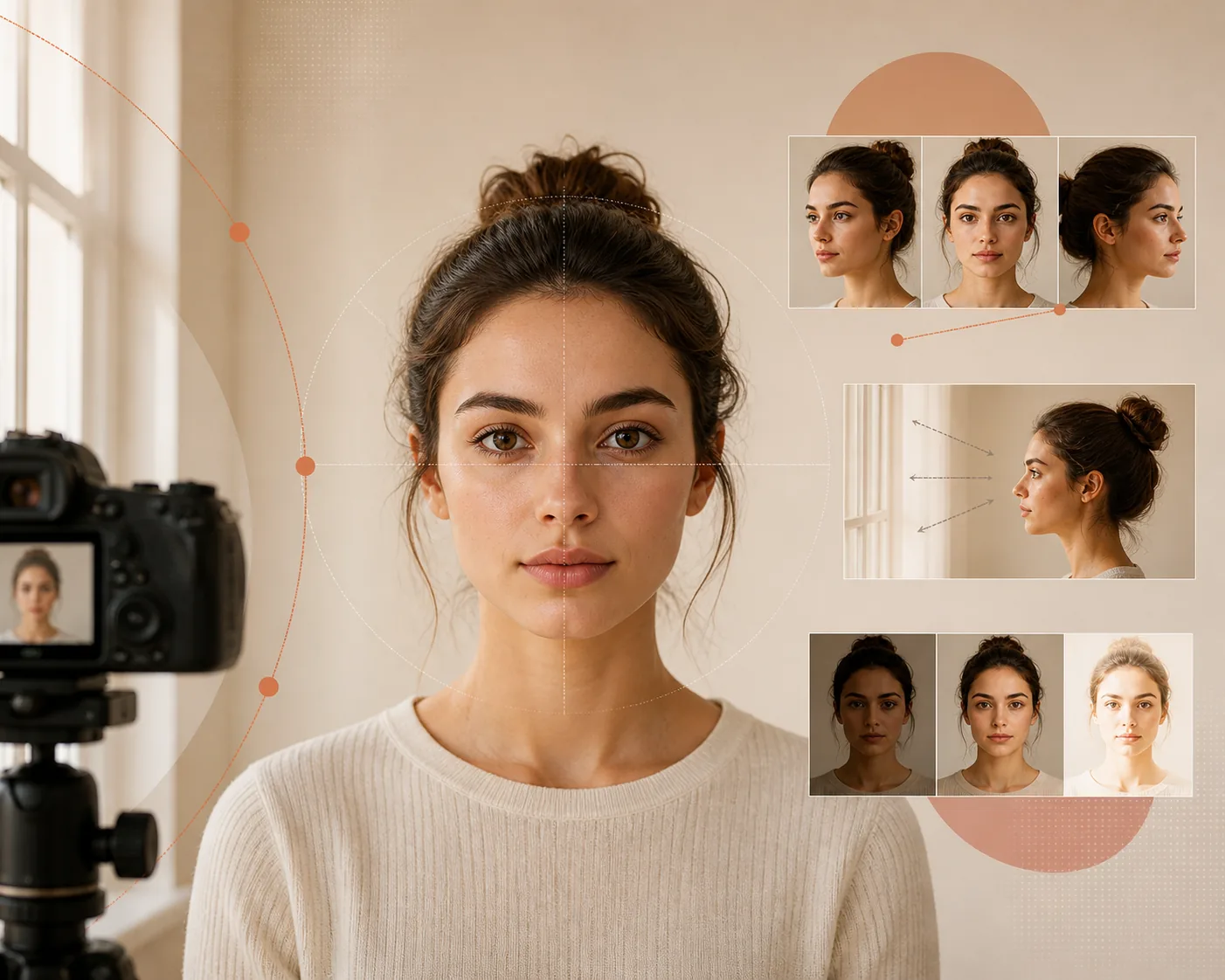
- Face the camera: Use a relaxed, front-facing pose with your eyes open and your whole face visible.
- Use soft, even light: Window light or a broad light source is usually more informative than a strong side shadow or overhead light.
- Keep a normal distance: Avoid a very close wide-angle selfie, which can change apparent nose, jaw, and face-width proportions.
- Avoid heavy filters: Beauty filters, strong sharpening, sunglasses, masks, and dramatic makeup can hide or reshape the cues the model reads.
- Compare like with like: If you are testing stability, use two or three clear photos taken under similar conditions rather than comparing unrelated images.
Accuracy, Bias, and Limits
There is no single accuracy number for every AI attractiveness test. Performance depends on the model, the data used to train it, the target population, the image conditions, and the definition of attractiveness built into the product.
- Dataset effects: A model can reproduce the preferences and demographic gaps present in its labeled images. A result may be less reliable for faces or presentation styles that are underrepresented in the data.
- Cultural context: Ideas about beauty vary across cultures, communities, and time. A global-looking interface does not make a score culturally neutral.
- Photo dependence: The camera angle, lens, light, expression, hairstyle, and crop can influence the result as much as the face itself.
- Construct validity: A model may be good at predicting ratings from its reference set without measuring a universal property called beauty.
- High-stakes misuse: Do not use an AI attractiveness score for employment, admissions, healthcare, identity, relationships, or decisions about another person.
A safer interpretation
Use the output for curiosity, photo feedback, or learning how visual features are described. Keep the result separate from self-worth and do not treat a model's preference as a prescription for changing your face.
Face-Photo Privacy Checklist
A face photo can be sensitive personal information. Before using a free AI face rater or attractiveness analyzer, read the service's privacy policy and look for concrete answers rather than vague promises.
- Is the photo stored, and if so, for how long?
- Is the image used to train or improve the service?
- Can you request deletion, and is deletion explained in plain language?
- Does the service require an account, email address, or unnecessary personal details?
- Are uploads encrypted in transit, and does the site clearly identify the operator?
Avoid uploading identity documents, children's photos, or someone else's portrait without permission. If you are only curious, use a low-stakes image and remove unnecessary metadata when practical.
Frequently Asked Questions
References and Further Reading
- Facial attractiveness research in PubMed Central — Background on how facial features and social perception have been studied.
- NIST Face Recognition Vendor Test — A primary source for understanding why face-analysis performance must be evaluated across conditions and groups.
- Scientific Reports: age estimation from face images — Research context for machine-learning estimates from face images and the limits of photo-based prediction.
About This Guide
Golden Ratio Face Editorial Team
The Golden Ratio Face editorial team explains consumer face-analysis tools in plain language. We focus on what a photo-based model can actually measure, where uncertainty enters the result, and how to use an AI score without treating it as a verdict about a person.
Last updated: August 18, 2026