Facial Asymmetry: Causes, What Is Normal, and When to Worry
A practical guide to natural differences, camera distortion, jaw and dental factors, and changes that should not be treated as cosmetic.


What does facial asymmetry mean?
Facial asymmetry is a visible difference in the shape, height, position, or movement of matching features on the two sides of the face. It may involve the eyebrows, eyelids, cheeks, nose, smile, jawline, chin, or soft tissue. Perfect mirror symmetry is not the human norm: growth, expression, bone structure, and tissue volume create small differences even in healthy faces.
The useful question is not simply whether a difference exists. Ask when it appeared, whether it is stable, whether it changes with expression, whether it appears only in certain photos, and whether it comes with pain, weakness, numbness, bite changes, or difficulty closing one eye. Those details separate normal variation and photo effects from problems that deserve professional assessment.
Stable and mild
A small difference present for years, without pain or loss of function, is often normal variation.
Expression-dependent
One eyebrow or mouth corner may move more during smiling or speaking without changing the resting face.
New or progressive
A difference that appears suddenly or keeps increasing should be assessed according to its timing and symptoms.
Common causes of an asymmetrical face
Facial asymmetry is a description, not one diagnosis. It can come from normal development, photography, expression, teeth and jaw alignment, soft tissue, injury, or a medical condition. The pattern and timing matter more than a single symmetry percentage.
| Pattern | Possible explanation | Useful next step |
|---|---|---|
| Long-standing, mild difference | Normal development, genetics, bone shape, or soft-tissue distribution | Compare standardized photos over time; no treatment is required simply because the sides differ |
| Visible mainly in selfies | Close camera distance, head rotation, mirrored preview, shadows, or expression | Retake a centered portrait from farther away with even light before drawing conclusions |
| Jaw or chin shifts, bite feels uneven | Dental midline, malocclusion, jaw growth, or temporomandibular-joint factors | Discuss persistent functional concerns with a dentist or orthodontic professional |
| Difference after injury | Swelling, fracture healing, scar tissue, or altered movement | Seek clinical assessment, especially with pain, bite change, vision problems, or worsening symptoms |
| New weakness or drooping | A nerve or neurological problem can cause a sudden change in facial movement | Treat sudden onset as urgent, especially with speech, arm, balance, or severe-headache symptoms |
Claims that one sleeping side, chewing habit, posture, or a short exercise routine is the sole cause are usually too simple. Research reviews describe many possible developmental, functional, traumatic, dental, skeletal, and medical factors, and some popular lifestyle explanations remain uncertain.
Why your face can look more asymmetrical in selfies
A photo is a projection, not a neutral copy of a three-dimensional face. When a phone is close, the features nearest the lens appear proportionally larger. A small turn can bring one cheek, eye, or jaw closer than the other, while wide-angle framing near the edge can stretch the image. Short-distance photography research has documented measurable facial distortion, especially around the nose and midface.
Mirrored previews create another surprise. You are familiar with your reflection, but a saved photo may flip the image. Normal differences then appear on unfamiliar sides and can feel more dramatic even when the underlying face has not changed. Lighting from one side and an uneven smile can add a false impression of structural imbalance.
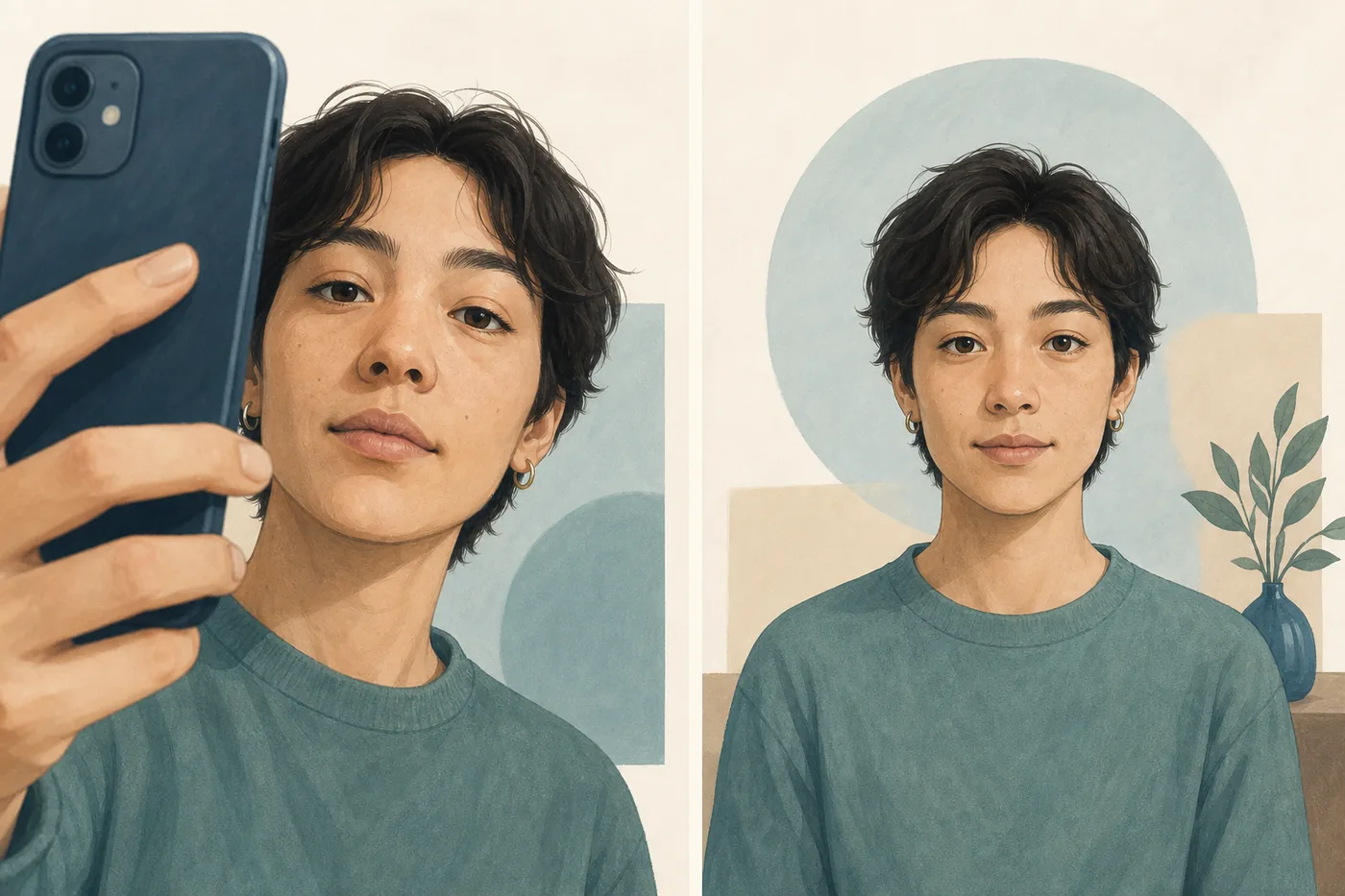
- Place the camera at eye level rather than above, below, or far to one side.
- Use the rear camera or a timer when possible and stand farther away; crop afterward instead of holding the lens close.
- Face forward with a relaxed jaw and neutral expression, and keep both ears similarly visible.
- Use soft, even front lighting and avoid a strong side light that deepens one cheek shadow.
- Compare several standardized photos, not one frame captured while speaking, blinking, or turning.
How to check facial asymmetry without overreading a score
A consistent image can help you describe what you see, but it cannot identify a cause. Treat the result as a photo-comparison aid rather than a beauty verdict or medical assessment.
- First ask whether the difference is new. If movement changed suddenly, skip the online test and seek urgent care.
- Take one neutral front-facing portrait using the photo setup above. Remove filters, portrait reshaping, and beauty effects.
- Check whether the tool found the eyes, nose, mouth, and chin correctly. Poor landmarks make the score unreliable.
- Repeat once with the same distance and light. Large score changes usually indicate photo sensitivity, not rapid physical change.
- Use the visual notes to discuss a persistent bite, jaw, eyelid, or movement concern with the relevant professional.
The face symmetry test on this site evaluates visible landmark balance in the uploaded image. It does not measure health, attractiveness, character, or the need for treatment.
When should facial asymmetry be checked by a professional?
Timing and function are the safest filters. A mild stable difference is unlike a new change in movement, sensation, speech, vision, or bite.
Get urgent medical help for sudden neurological signs
Seek emergency care for sudden one-sided facial drooping, weakness or numbness—especially with arm weakness, confusion, trouble speaking or understanding speech, balance trouble, vision change, or a sudden severe headache. Do not wait for an online result. Difficulty closing one eye or a sudden facial weakness without other stroke signs also needs prompt medical assessment because several conditions can affect the facial nerve.
Arrange a routine evaluation when function or progression is involved
Consider a dentist, orthodontic professional, primary-care clinician, eye professional, or another appropriate specialist when the difference is gradually worsening, follows trauma, changes the bite, causes jaw pain or locking, affects chewing, makes one eye difficult to close, or causes persistent concern. The right professional depends on the symptom, not the symmetry score.
Can facial asymmetry be fixed naturally?
There is no universal home method that makes a face perfectly symmetrical, and perfect symmetry is not a necessary goal. Sleep-position changes, facial exercises, chewing on one side, massage, or online “mewing” routines should not be presented as proven corrections for bone, dental, nerve, or developmental causes. Aggressive exercises may also aggravate jaw pain or reinforce anxiety about normal features.
What helps depends on the cause. Better photo distance and lighting can correct an image problem immediately. A dental or jaw issue may need professional evaluation. Facial weakness needs medical diagnosis and cause-specific care. A stable cosmetic concern may be discussed with a qualified clinician only after expectations, risks, and alternatives are clear. Choosing no treatment is also valid for normal variation.
- For photos: standardize distance, angle, expression, and lighting before comparing.
- For bite or jaw symptoms: seek dental or orthodontic assessment rather than self-directed chewing exercises.
- For sudden weakness: seek urgent medical care rather than attempting massage or a symmetry test.
- For appearance distress: step away from repeated checking and consider talking with a healthcare or mental-health professional if it affects daily life.
Facial asymmetry FAQ
Sources and further reading
- Clinical review of facial-asymmetry causes, classification, and assessment. PubMed Central
- Official warning signs for stroke, including sudden one-sided facial weakness. U.S. Centers for Disease Control and Prevention
- Overview of Bell's palsy and facial weakness that needs prompt assessment. NHS
- Research on distortion caused by short-distance selfies. PubMed Central
Related guides and tools
Last updated: July 25, 2026